

[ad_1]
Mumbai: Rows of fresh red-leafed poinsettias lined the red carpet at Mumbai’s oldest museum whose teakwood doors reopen to the public after four years on Thursday.
“A city’s richness is not assessed through its tall buildings, fancy roads, or wealthy residents but through its museums,” said chief minister Devendra Fadnavis during the inauguration of the newly renovated Dr Bhau Daji Lad Museum in Byculla (East) on Wednesday.
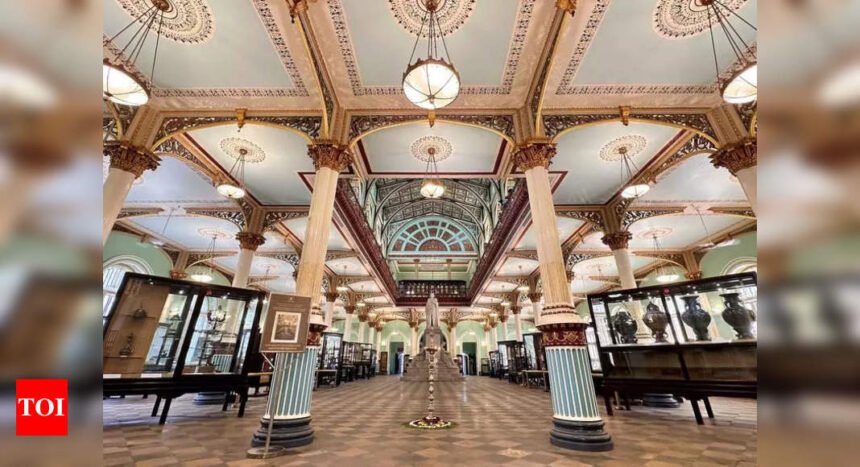
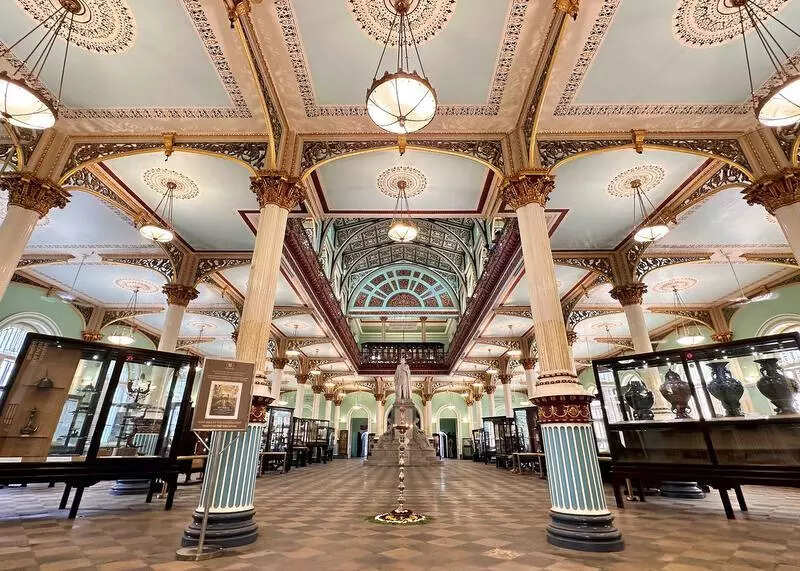
Highlighting the 154-year-old institution as the state’s oldest and India’s third oldest museum, Fadnavis emphasized that the revamped space—with freshly painted green walls and white columns—will boost Mumbai’s tourism.
“Museums offer a window into a city’s cultural history and heritage,” he said. “They help future generations understand how a society was built and how its progress unfolded.”
Established in 1855 as the Victoria and Albert Museum, the museum opened to the public in 1857 at Town Barracks. Built in the grand Renaissance Revival style, its Palladian architecture with high Victorian interiors make it stand out.
“No other building in the country is quite the same,” said Tasneem Mehta, managing trustee and honorary director of Dr Bhau Daji Lad museum, adding that the museum boasted 3,000 visitors a day in the early 20th century, serving as a cultural gateway to the evolution of Mumbai’s modern ethos and the emergence of an Early Modern aesthetic movement that would redefine Indian art and architecture.
Initially named ‘The Victoria and Albert Museum, Bombay’, it was renamed after scholar Dr Ramachandra Vitthal Lad–popularly known as Dr Bhau Daji Lad–in 1975. “Dr Bhau Daji Lad was not only a doctor but also a dedicated social worker who spent his life preserving historical relics. His efforts in collecting and donating valuable items laid the foundation for this museum, which has carried his name for the last 50 years,” said Fadnavis in his speech.
For many years post-Independence, the museum fell into disrepair as it was considered a colonial relic. In 1997, while searching for a location to establish a conservation laboratory, INTACH (Indian National Trust for Art and Cultural Heritage) convenor Tasneem Mehta visited the museum and found that the external façade as well as the interior walls were highly damaged. Algae were visible in most places of the exterior façade, plant growth had penetrated deep into the building’s core and poor lighting created a gloomy atmosphere.
So, in 2003, INTACH Mumbai approached the MCGM (Municipal Corporation of Greater Mumbai) to revitalize the museum. The Jamnalal Bajaj Foundation agreed to donate half the funds and MCGM contributed the rest. A tripartite agreement was signed for 15 years for the complete restoration. This landmark public-private partnership earned the museum a UNESCO cultural heritage conservation award in 2005.
At the reopening on Wednesday, BMC Commissioner Bhushan Gagrani reminisced about a visit to the State Hermitage Museum in St Petersburg with Fadnavis in 2017. On seeing the Hermitage, the world’s second largest after The Louvre in France, “the CM had wondered why Maharashtra could not have a museum of that scale,” said Gagrani, adding that the walls of the museum in Byculla are painted celadon green, the same shade as the Hermitage. “Celadon green is the colour of contemplation,” said Mehta.
The recent renovation addressed structural deterioration caused by harsh weather. “The paint was peeling, slabs were weakening, and plasters were leaking,” said Sudarshan Shirsat of BMC’s heritage cell. Restorers worked carefully to avoid damaging artefacts, especially during repairs to the tympanum, a semi-circular decorative feature. “We wanted to keep the 24-karat gold gilding on the ceiling and columns intact,” said Shirsat. New stencil work complements the existing gilding, reviving the museum’s historic splendour.
A key moment was when Fadnavis pointed to the Indus Valley civilization as one of the oldest in the world. “Our country has a rich history that is over 10,000 years old. Wherever you go, you will find remnants of our rich civilization. Our misfortune is not all of it was preserved. It’s our duty to conserve the path to progress for future generations,” said Fadnavis.
“A city’s richness is not assessed through its tall buildings, fancy roads, or wealthy residents but through its museums,” said chief minister Devendra Fadnavis during the inauguration of the newly renovated Dr Bhau Daji Lad Museum in Byculla (East) on Wednesday.
Highlighting the 154-year-old institution as the state’s oldest and India’s third oldest museum, Fadnavis emphasized that the revamped space—with freshly painted green walls and white columns—will boost Mumbai’s tourism.
“Museums offer a window into a city’s cultural history and heritage,” he said. “They help future generations understand how a society was built and how its progress unfolded.”
Established in 1855 as the Victoria and Albert Museum, the museum opened to the public in 1857 at Town Barracks. Built in the grand Renaissance Revival style, its Palladian architecture with high Victorian interiors make it stand out.
“No other building in the country is quite the same,” said Tasneem Mehta, managing trustee and honorary director of Dr Bhau Daji Lad museum, adding that the museum boasted 3,000 visitors a day in the early 20th century, serving as a cultural gateway to the evolution of Mumbai’s modern ethos and the emergence of an Early Modern aesthetic movement that would redefine Indian art and architecture.
Initially named ‘The Victoria and Albert Museum, Bombay’, it was renamed after scholar Dr Ramachandra Vitthal Lad–popularly known as Dr Bhau Daji Lad–in 1975. “Dr Bhau Daji Lad was not only a doctor but also a dedicated social worker who spent his life preserving historical relics. His efforts in collecting and donating valuable items laid the foundation for this museum, which has carried his name for the last 50 years,” said Fadnavis in his speech.
For many years post-Independence, the museum fell into disrepair as it was considered a colonial relic. In 1997, while searching for a location to establish a conservation laboratory, INTACH (Indian National Trust for Art and Cultural Heritage) convenor Tasneem Mehta visited the museum and found that the external façade as well as the interior walls were highly damaged. Algae were visible in most places of the exterior façade, plant growth had penetrated deep into the building’s core and poor lighting created a gloomy atmosphere.
So, in 2003, INTACH Mumbai approached the MCGM (Municipal Corporation of Greater Mumbai) to revitalize the museum. The Jamnalal Bajaj Foundation agreed to donate half the funds and MCGM contributed the rest. A tripartite agreement was signed for 15 years for the complete restoration. This landmark public-private partnership earned the museum a UNESCO cultural heritage conservation award in 2005.
At the reopening on Wednesday, BMC Commissioner Bhushan Gagrani reminisced about a visit to the State Hermitage Museum in St Petersburg with Fadnavis in 2017. On seeing the Hermitage, the world’s second largest after The Louvre in France, “the CM had wondered why Maharashtra could not have a museum of that scale,” said Gagrani, adding that the walls of the museum in Byculla are painted celadon green, the same shade as the Hermitage. “Celadon green is the colour of contemplation,” said Mehta.
The recent renovation addressed structural deterioration caused by harsh weather. “The paint was peeling, slabs were weakening, and plasters were leaking,” said Sudarshan Shirsat of BMC’s heritage cell. Restorers worked carefully to avoid damaging artefacts, especially during repairs to the tympanum, a semi-circular decorative feature. “We wanted to keep the 24-karat gold gilding on the ceiling and columns intact,” said Shirsat. New stencil work complements the existing gilding, reviving the museum’s historic splendour.
A key moment was when Fadnavis pointed to the Indus Valley civilization as one of the oldest in the world. “Our country has a rich history that is over 10,000 years old. Wherever you go, you will find remnants of our rich civilization. Our misfortune is not all of it was preserved. It’s our duty to conserve the path to progress for future generations,” said Fadnavis.
[ad_2]
Source link